 Back to Listing
Arizona’s public universities help bring America’s missing service members home
The Arizona Center for the Missing in Action unites the state's public universities with the Defense POW/MIA Accounting Agency to help bring the state’s 383 missing service members home.
Arizona's public universities have long been a destination for service members and veterans continuing their education. Through the Arizona Center for the Missing in Action, they are also helping account for those who never returned.
Nearly 81,000 Americans remain missing from World War II and later conflicts, about 383 of them from Arizona. Many have been missing for more than 80 years, and time is working against the search to recover their remains.
Recovering and identifying the missing takes historians, archaeologists, forensic scientists and geneticists working together. That combination of disciplines exists across Arizona’s public universities. The center brings together students and faculty from Arizona State University, Northern Arizona University and the University of Arizona in partnership with the Defense POW/MIA Accounting Agency (DPAA), the Department of War agency responsible for accounting for missing service members.
“Our universities have the research and forensic expertise this work demands, and together they are setting an example for the nation,” said Chair Doug Goodyear. “Helping bring home those who bravely served our nation and never returned is an honor and one we are humbled to provide.”
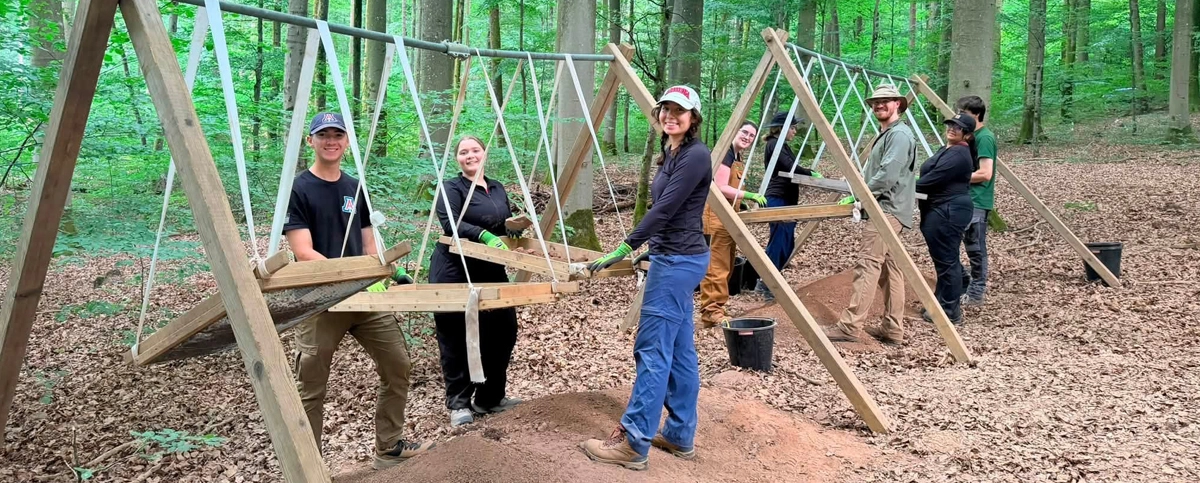
The work begins in the archives, where students study records and crew histories to understand who was aboard and where they were lost. It continues in the field, where students work beside DPAA specialists and local archaeologists, screening soil for remains and personal effects that are then cataloged for DNA analysis and identification.
For Regent Jim McCain, the mission of the center is personal. McCain is a Marine Corps and Army veteran whose family’s military service spans four generations. That includes his father, the late U.S. Sen. John McCain, who spent more than five years as a prisoner of war in Vietnam. His family’s wait ended when his father came home. For the families of the missing, their wait continues.
“My family knows what it means to wait for someone to come home,” said Regent McCain. “Those who serve this country are prepared to give everything, and our nation owes them everything. The work happening at our universities honors that commitment and the families still waiting for answers.”
Today, students take part in recovery missions led by DPAA. The center’s goal is to do more. It aims to fund at least one recovery mission per school each year and, over time, to lead efforts itself, from the first archival search through excavation. That would give Arizona a greater role in a national mission and give more students the chance to take part.
“Every name on that list represents a family still waiting for answers,” said Lt. Col. Rich Ingleby, director of the Arizona Center for the Missing in Action. “When students help bring a service member home, they come to understand what service and sacrifice truly mean. At the current pace, this mission will take generations. We have the people and the expertise to change that, and we intend to keep growing this program until every family has its answer.”
The center is one part of a broader commitment across Arizona's public universities to those who have served. Each university offers dedicated support to help military-connected students succeed from enrollment through graduation and into their careers.
At ASU, the Pat Tillman Veterans Center operates offices on four campuses and supports students studying through ASU Online. Staff help students navigate military education benefits, and the VA's Vet Success on Campus program connects them with federal resources without leaving campus. The center also prepares students for civilian careers, including through the Department of War SkillBridge internship program, which lets transitioning service members gain civilian work experience before leaving the military. The Veterans Scholar Program and Sun Devil Vets for Life keep students connected to a community of fellow veterans during and after their time at ASU, while wellness programming and a Women Veterans Conference support students well beyond academics.
At NAU, Veteran and Military Services operates Veteran Success Centers in Flagstaff and Yuma, including a dedicated center for business students in the W. A. Franke College of Business. Incoming students are paired with peer mentors through the Vet Jack Resource Navigator, helping them connect with services before their first day of class, and a writing specialist helps them translate military writing experience to academic work. NAU also offers a first-year seminar designed specifically for veterans, helping students build community with one another as they make the transition from military service to the classroom. Veteran-specific scholarships, including the Major General Earl and Nadia Matthews Military Spouse Scholarship and the Ray Sparks Scholarship for Veteran Business Students, help students and their families across disciplines finance their degrees.
At the U of A, the Veterans Education and Transition Services (VETS) Center works alongside the Military-Connected Benefits & Certifications office, a central hub that streamlines benefits processing for military-connected students. VETS Peer Advocacy Liaisons connect new students with fellow veterans who have made the same transition, while academic and career support helps them carry the skills they built in uniform into what comes next. Students also find community through the university's Student Veterans of America chapter, and dedicated scholarships, including support for Tillman Scholars, help ease the cost of their education. A designated Purple Heart institution, the U of A extends these services to students on its Tucson campus and those studying through Arizona Online.
The board anticipates a discussion on the Arizona Center for the Missing in Action with Lt. Col. Ingleby at its Nov. 19 meeting. Regents will hear about opportunities to build on the recovery work already underway and learn about a recent mission from a student who supported a recovery effort.