 Back to Listing
ABOR approves Regents’ Research Grant to power sustainable agriculture in Arizona
The Arizona Hub for Agriculture Innovation will create a statewide discovery pipeline to turn university research into practical solutions for sustainable farming in arid regions.
The Arizona Board of Regents has approved a $3 million Regents’ Grant to launch the Arizona Hub for Agriculture Innovation, a statewide collaboration designed to strengthen Arizona’s $30 billion agriculture industry and advance resilient and sustainable farming practices that can thrive in water-limited environments.
The tri-university initiative brings together the Arizona Department of Agriculture and the state’s public universities – Arizona State University, Northern Arizona University and the University of Arizona – to translate cutting-edge research into scalable, practical solutions for farmers and producers across the state. Centered in Yuma, Arizona’s year-round agriculture region, the hub will align research capacity, industry partnerships and state priorities to ensure long-term agriculture resilience and address challenges such as groundwater depletion and resource scarcity.
“Arizona’s universities are pioneering technologies that advance both our agricultural sector and the well-being of our communities,” said ABOR Chair Doug Goodyear. “By bridging research with real-world application, this grant strengthens Arizona’s role as a driver of innovation and helps to power one of our state’s most critical industries.”
The initiative will focus on developing solutions critical to industry and state needs including precision agriculture, soil health, crop innovation and workforce development. The hub will also establish the Ag Innovation Lab, a statewide program that connects agriculture researchers, engineers, data scientists and industry partners to accelerate the development and deployment of precision agriculture technologies. The lab will leverage the universities’ research and development strengths to test new discoveries and scale innovations for real-world use in farms across Yuma and other agricultural areas.
To ensure the hub’s success, the Arizona Department of Agriculture will collaborate with the board and the universities to turn state challenges into opportunities for innovation, positioning Arizona as a national model for water-smart, economically viable agriculture in arid regions worldwide. The department will also align efforts with priorities from other state agencies, including State Land, Water Resources, Environmental Quality and the Commerce Authority.
“The Arizona Department of Agriculture is thrilled to be working with the Board of Regents and our three universities to advance the future of Arizona agriculture in a drying climate,” said Director Paul Brierley. “By collaborating across institutions and with our producers, we’re ensuring that Arizona remains a leader in sustainable, resilient farming – and that land fallowing need not be the default response to water shortages.”
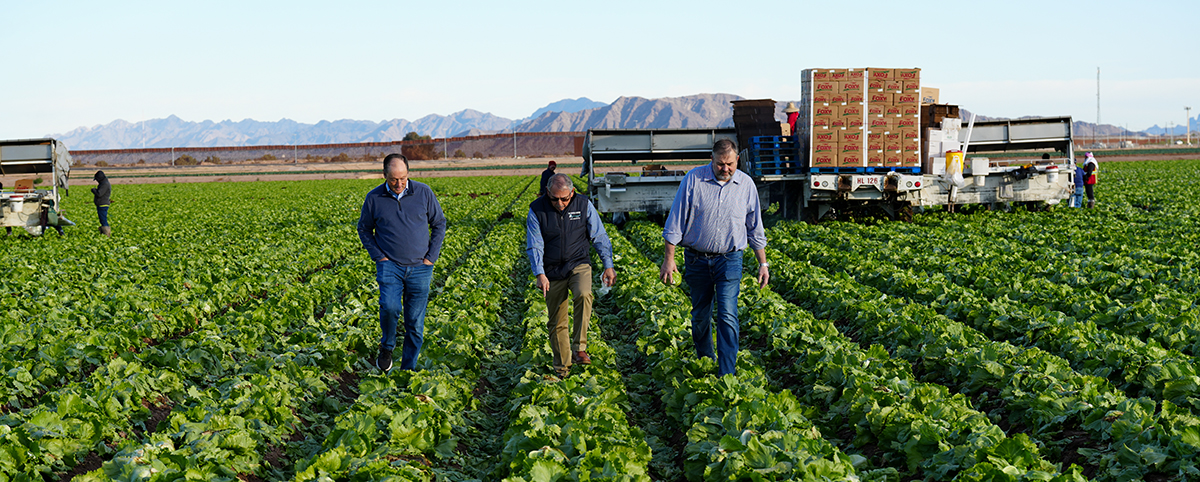
The Regents’ Grant was approved during a special board meeting in Yuma, where Arizona state Sen. Tim Dunn, a lifelong Yuma resident and local farmer, highlighted the region’s role in national food security. He also emphasized what makes Yuma’s agricultural success unique including year-round crop production, high-value agriculture, robust broadband infrastructure and a culture of innovation among farmers and agri-business leaders. The meeting also included presentations from the universities’ vice presidents of research underscoring their commitment to addressing Arizona’s agricultural challenges through collaboration and applied research.
“Yuma’s agriculture community knows how to tackle tough challenges, but we can’t do it alone. By working with our universities, we can bring new technology, research and ideas to the people who need it most,” said Sen. Dunn. “Grant funding like this can help create long-term solutions and prepare the next generation of leaders. I applaud the Arizona Board of Regents for supporting this effort and helping build a stronger, more sustainable future for agriculture in Yuma.”
This effort builds on the board’s Future of Arizona convening held earlier this year in Yuma, where state, industry and university leaders developed a roadmap for sustainable agriculture. The convening focused on water management, crop production and sustainability, as well as Yuma’s critical role in Arizona’s agriculture industry.
With Yuma as its anchor and statewide collaboration as its foundation, the Arizona Hub for Agriculture Innovation aims to keep Arizona at the forefront of sustainable arid-land food production, proving that innovation and conservation can thrive together.