 Back to Listing
ABOR convenes leaders to shape research driven energy solutions for Arizona
Energy leaders and researchers explore practical, near term research needs tied to reliability, infrastructure and growth.
With rising demand from population growth, data centers and artificial intelligence placing new pressure on Arizona’s energy systems, the Arizona Board of Regents convened industry leaders and university researchers as part of the Future of Arizona series to identify near-term research priorities and explore how the state’s public universities can help develop practical solutions.
In coordination with the Arizona Commerce Authority, the energy resiliency discussion built on an earlier board‑led roundtable that highlighted challenges facing utility and infrastructure providers. Those leaders pointed to pressures tied to data center development, artificial intelligence and water use, alongside opportunities driven by population and economic growth.
“Industry leaders clearly defined the challenges the state is facing,” Regent Jessica Pacheco said. “It’s the board’s opportunity to take the lead in aligning those needs with the research strengths of our public universities and mobilizing the right partners to deliver results.”
Hosted at Salt River Project’s PERA Club in Tempe, the convening brought together executives from Arizona’s major utilities and renewable energy companies with researchers from Arizona State University, Northern Arizona University and the University of Arizona. Regent Pacheco and Arizona Commerce Authority President and Chief Executive Officer Sandra Watson co-moderated the discussion guiding participants from industry challenges toward potential research collaboration.
“Arizona’s premier energy reliability and forward planning have helped fuel our unprecedented economic growth,” Watson said. “Through active collaboration between industry, economic development and our public universities, we have an opportunity to move faster, make smarter decisions and position Arizona to continue leading in a rapidly changing energy landscape.”
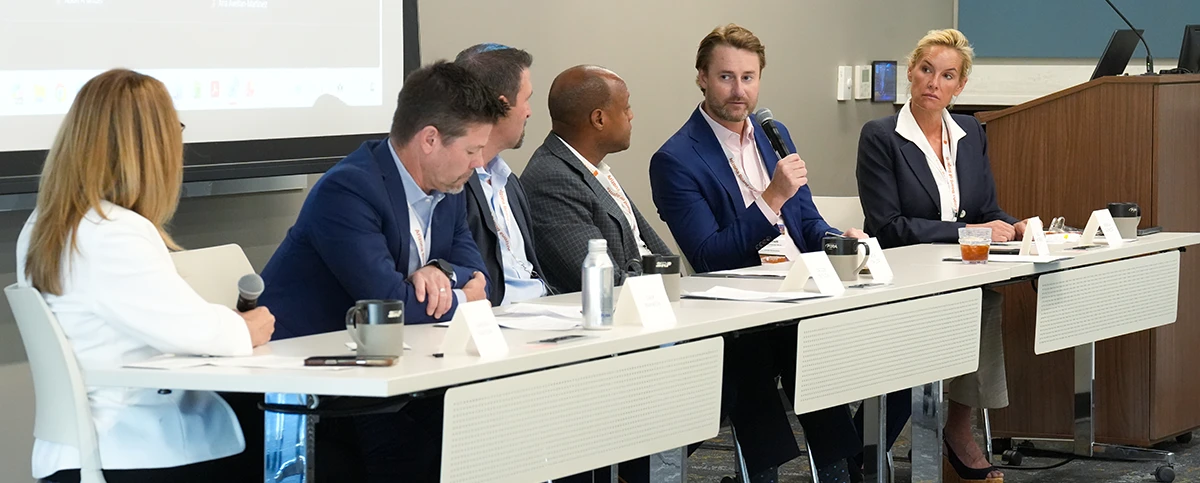
Pacheco and Watson also moderated a panel discussion featuring senior energy executives, including Erik Bakken, president of Tucson Electric Power; Will Mitchell, chief commercial officer at Elevate Renewables; Rob Taylor, associate general manager and chief public affairs and corporate services executive at Salt River Project; and Jacob Tetlow, executive vice president of operations at Arizona Public Service.
“Arizona has enormous momentum. People want to live and work here, and companies are choosing to invest here,” said Tetlow. “To sustain that growth, we need the infrastructure and talent to match it. Bringing industry and universities together helps us build the workforce, challenge assumptions and develop the capabilities Arizona will need to compete in advanced energy and other critical sectors.”
Panelists addressed grid reliability, infrastructure planning, workforce development and increasing demand tied to continued economic growth. Several emphasized that progress depends on coordination among organizations that often plan and invest on different timelines.
“Meeting future energy demand takes more than short‑term fixes,” Taylor said. “For Arizona to maintain high reliability while managing costs, collaboration among all three utilities is a significant advantage for our state.”
University leaders, including Dr. Scott Barclay, assistant vice president of research in ASU’s Knowledge Enterprise; Dr. Andy Koppisch, NAU’s associate vice president for research; and Dr. Linda Bixby, chief research partnership officer at the U of A, described research already underway across the three institutions including work related to energy systems, artificial intelligence, microelectronics, fusion energy and workforce development. Those presentations informed a broader discussion on near‑term research opportunities that could support energy providers and inform long-term planning in alignment with the state’s economic priorities.
Insights from the convening may be used to shape an opportunity statement for a potential Regents’ Research Grant focused on near-term research aligned with priorities identified by energy leaders and state partners. University teams would then submit proposals focused on applied research and near‑term impact. The board has used this approach in other policy areas, including tech transfer, agriculture innovation and wildfire resilience that have helped align university research with immediate needs facing the state.
“This convening is one part of the broad level of collaboration needed to advance Arizona’s energy future,” said ABOR Executive Director Chad Sampson. “The Governor’s Energy Promise Task Force has outlined key statewide recommendations, and by aligning those priorities with the work of our utilities, the research strengths of our universities and the vast stakeholders invested in Arizona’s energy future, we can help support practical, near-term solutions.”
To view and download videos and photos from the event, click here.